
Delhi and its surrounding NCR region are once again covered in a thick blanket of smog as winter sets in. Even though traffic slows down at night and fewer vehicles are on the road, the air in the early morning hours feels choking and heavy. Many residents wake up coughing, with itchy eyes and burning throats. This raises a simple question — if there’s less traffic at night, why does the air feel so bad in the morning?
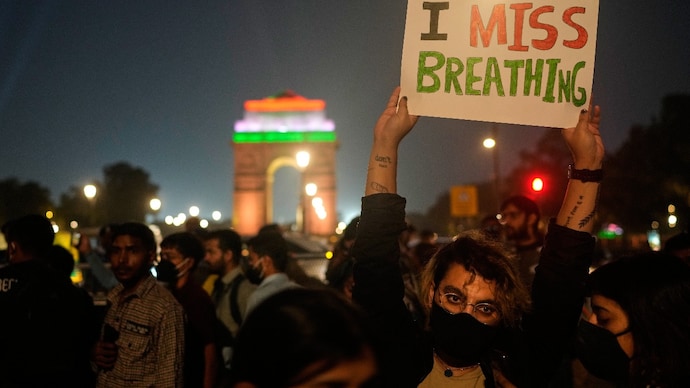
The answer lies not just in pollution sources, but also in how winter weather behaves. Let’s break it down step by step.
1. What is really happening in Delhi’s air?
Every year between late October and February, Delhi’s air quality index (AQI) crosses into the “severe” category. This means that the air is filled with harmful particles such as PM2.5 and PM10 — small enough to enter deep into your lungs and bloodstream. These particles come from vehicle exhaust, construction dust, burning of crop residue (stubble burning), and industrial smoke.
However, what makes winter worse is not just the increase in pollution but the way the atmosphere traps it close to the ground.
2. The science behind morning pollution: Temperature Inversion
Usually, warm air near the surface rises and carries pollutants upward, allowing cleaner air to circulate. But in winter, especially during the night, the ground cools down quickly while the air above it remains warmer. This creates a layer of cold air trapped under a warm layer — a phenomenon called temperature inversion.
When this happens, all the pollutants from cars, factories, and stubble burning get stuck near the ground instead of dispersing. This is why the air feels much heavier and dirtier early in the morning.
As the sun rises and the temperature increases, the inversion slowly breaks. By afternoon, some of the pollutants rise and spread out, slightly improving air quality. But overnight, the same process repeats.
healthboostfit.com | silkesell.com | maps-long-island.com
HostingPerTutti.com | finvestguide.com
3. Less traffic, but pollution stays trapped
It’s true that traffic and industrial activity reduce during nighttime. However, even though there’s less pollution being generated, the existing pollutants don’t go anywhere. They simply stay trapped in the cold layer near the ground.
Moreover, diesel trucks that are allowed to move in and out of Delhi during late hours add to nighttime emissions. This worsens the air quality further by the time morning comes.
4. Stubble burning makes things worse
Around the same time each year, farmers in Punjab and Haryana burn leftover paddy stubble to prepare for the next crop. The smoke from these fields drifts toward Delhi due to wind patterns in North India. Once the smoke enters the NCR, the temperature inversion prevents it from escaping.
According to SAFAR (System of Air Quality and Weather Forecasting and Research), stubble burning can contribute up to 35–40% of Delhi’s pollution during peak burning days. Combine that with Delhi’s local pollution sources, and the situation becomes alarming.
5. Construction dust and household pollution
While we often blame vehicles and farmers, construction activities, road dust, and household sources such as wood or coal burning also play a big role. Many areas in Delhi have ongoing construction, and dust particles get suspended in the air. During winter, these particles settle slowly because the air movement is weak.
Also, some households in lower-income areas use wood or coal for cooking and heating, adding more smoke to the already toxic air.
6. Health impact of morning pollution
Morning air pollution is extremely harmful. Since the concentration of PM2.5 and PM10 is highest during this time, people who go for early walks or morning runs end up inhaling more pollutants than usual. Doctors often advise avoiding outdoor exercise early in the day during winter.
Exposure to high levels of air pollution can cause:
-
Breathing difficulties and asthma attacks
-
Eye irritation and throat infections
-
Reduced lung capacity
-
Long-term risk of heart disease and cancer
Children, the elderly, and people with pre-existing health conditions are most at risk.
7. What can citizens do?
While it may not be possible to control the weather, there are several steps individuals can take to reduce exposure and contribute to cleaner air:
-
Avoid morning walks when AQI is severe. Prefer afternoons when pollution levels drop slightly.
-
Use N95 masks when stepping outdoors. They filter out most PM2.5 particles.
-
Keep indoor plants such as aloe vera, peace lily, or snake plant that help purify the air.
-
Avoid burning waste or leaves near your home.
-
Carpool, use public transport, or cycle short distances to cut down emissions.
-
Use air purifiers indoors, especially for children and elderly members.
-
Stay updated on AQI levels through apps like SAFAR, AQI India, or the CPCB website.
8. What can the government do?
Delhi’s pollution problem is not new. It needs both immediate and long-term solutions:
-
Stronger enforcement of the Graded Response Action Plan (GRAP) to control pollution spikes.
-
Support for farmers to switch from stubble burning to eco-friendly alternatives.
-
Better public transport and EV infrastructure to reduce vehicle emissions.
-
Strict regulation of construction dust and industrial emissions.
-
Awareness campaigns to inform citizens about pollution and prevention.
Experts also stress the importance of regional cooperation, since Delhi’s air quality depends heavily on what happens in neighboring states.
9. The way forward
Delhi’s toxic mornings remind us that clean air cannot be taken for granted. It is not just an environmental issue but a public health emergency. The haze that covers the city each winter is a warning — that economic growth and urban development must go hand in hand with sustainability.
Citizens, industries, and governments all have a shared responsibility. Reducing pollution requires consistent effort, better technology, and a change in daily habits.
If India can successfully manage its urban air quality, it will not only save lives but also make cities like Delhi healthier and more livable for future generations.