
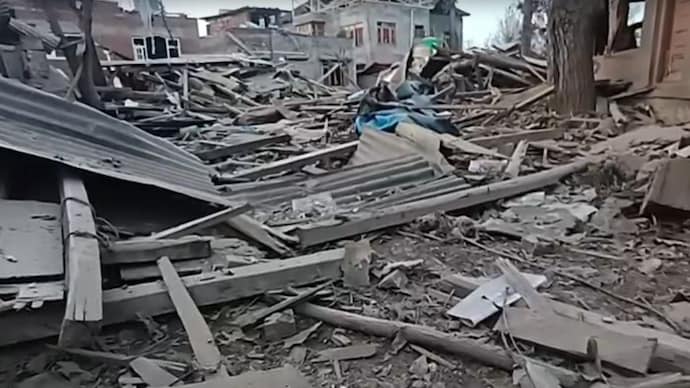
In a major development in the Red Fort blast investigation, security agencies have confirmed that Dr Umar Nabi, the key suspect behind Monday’s deadly attack, was indeed the bomber. The confirmation came after DNA samples collected from the blast site matched with those of his mother, providing irrefutable proof of his involvement. Soon after, security forces conducted an operation in South Kashmir’s Pulwama district, where Umar Nabi’s family house was demolished as part of an anti-terror action.
The series of events marks one of the most critical breakthroughs in the case, offering clarity on the network behind the blast and helping authorities track down the larger group still believed to be active.
How DNA Helped Crack the Case
When the Red Fort blast occurred, investigators recovered several body parts near the burnt Hyundai i20 car used in the attack. However, they did not have immediate confirmation on whether the bomber had died in the explosion or escaped.
To solve this mystery, forensic teams conducted advanced DNA analysis using tissue samples found at the site. These were cross-matched with DNA swabs collected from Umar Nabi’s mother in Pulwama. The results were conclusive, confirming that the remains found belonged to Umar.
With this breakthrough, authorities now believe that Umar was driving the explosive-laden Hyundai i20 that was triggered during the attack. His death inside the vehicle indicates it was a suicide bombing attempt, likely planned with precision to create maximum chaos.
Umar’s Involvement and Radicalisation
Dr Umar Nabi was not just any suspect — he was a highly educated medical professional, trained and respected in his field. Over the past few months, investigators believe he had become deeply radicalised and recruited by an organised terror network.
The Hyundai i20 used in the blast was traced back to him through registration records, surveillance footage, and now DNA confirmation. Officials are also investigating whether Umar acted alone inside the car or was assisted by others who planned the logistics, supplied the explosives, or guided him remotely.
This case has once again raised concerns about the rising trend of highly educated individuals being pulled into terror modules, making the threat landscape more complex for intelligence agencies.
Security Forces Demolish His Pulwama Home
Soon after Umar’s identity was confirmed, security forces carried out an operation in Newa village of Pulwama, where the bomber lived with his family. His house was demolished using controlled explosives and heavy machinery.
This step serves multiple purposes:
-
Neutralising possible safe houses used for storing explosives or planning attacks
-
Sending a strong message to other active terrorists in the region
-
Preventing the property from becoming a future shelter for underground networks
Security forces also conducted searches in the surrounding areas to trace potential associates and gather additional evidence linked to his activities.
The Hyundai i20: A Key Link in the Blast
The car used in the attack, a Hyundai i20, was found burnt near the Red Fort. Investigators discovered that the vehicle was registered in Umar’s name and had been fitted with a large quantity of explosives.
Key details discovered so far:
-
The car was driven from Kashmir to Delhi earlier this month.
-
Several CCTV cameras near the attack route captured the vehicle’s movement.
-
Forensic teams found traces of chemicals commonly used in improvised explosive devices (IEDs).
-
The ignition system appeared to be manually triggered from inside the car.
These details point to a well-planned suicide bombing attempt rather than a remote-controlled blast.
Major Case Breakthrough for Delhi Police and NIA
The DNA match has given investigators solid evidence to establish:
-
The identity of the bomber
-
His direct role in executing the attack
-
A trail leading to the broader module behind him
Multiple agencies — Delhi Police, Special Cell, NIA, and central intelligence units — are now mapping his phone data, travel records, bank transactions, and contacts in Kashmir and outside India.
Sources suggest the module may have foreign links, and several suspects are already on the radar.
What Happens Next?
Authorities are now focusing on:
1. Tracking down Umar’s handlers
Investigators believe he had at least two handlers, either operating from Pakistan or from a sleeper cell inside India.
2. Identifying local support
No large-scale attack is possible without local ground support — logistics, vehicle movement, shelter, and communication.
3. Mapping the entire network
The Red Fort blast may be part of a larger plot, and agencies are working to ensure no further attacks are planned.
4. Strengthening security in Delhi
With the confirmation of Umar’s identity, security agencies have increased surveillance at key public places, government buildings, and transport hubs.
Growing Trend of Educated Youth in Terror Modules
This case is not unique. Over the past few years, several highly educated individuals — including doctors, PhD scholars, engineers, and IT professionals — have been caught joining terror groups. It highlights how:
-
Online radicalisation
-
Secret propaganda channels
-
Misuse of encrypted apps
-
Financial inducements
…are making recruitment easier and harder to detect.
Authorities are now focusing on psychological profiling and early-warning systems to identify at-risk individuals before they fall into extremist networks.
A Critical Turning Point in the Red Fort Blast Case
The destruction of Umar Nabi’s house, combined with the DNA confirmation, marks a major chapter in the investigation. It not only confirms the bomber’s death but also provides a clear direction for investigators to identify and dismantle the group behind him.
While the pain of the attack remains fresh, the breakthrough brings the probe closer to justice, helping prevent future attacks and ensuring the masterminds behind the blast face accountability.