
A tragic incident struck Jammu and Kashmir on Wednesday when a massive explosion tore through the Nowgam Police Station in Srinagar. The blast, caused by explosives stored inside the station, claimed the lives of at least nine people and left more than 25 injured. What unfolded was not just a devastating accident but an event that has raised serious concerns about safety protocols, handling of explosive materials, and potential terror links.
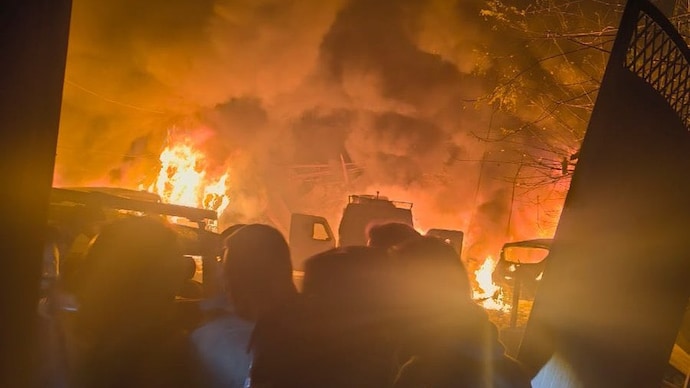
This article provides a detailed account of the incident, the background of the explosives, response from authorities, ongoing investigations, and broader implications for security in Jammu and Kashmir.
The Incident: A Routine Task Turns Deadly
According to early reports, the explosion occurred while police personnel were handling certain explosive materials that had been seized during an investigation. The explosives were linked to the Faridabad terror module case, a matter already under scrutiny for its suspected cross-border connections.
Around mid-morning, officers at the Nowgam Police Station began the process of checking and sorting the seized explosives. What was expected to be a routine procedure turned into a horrifying tragedy when the stored material detonated unexpectedly. The explosion was so powerful that it ripped through the building, injuring officers, civilians present near the premises, and damaging nearby structures.
Eyewitnesses described hearing a loud boom that shook the area, followed by chaos, dust, and screams for help. The injured were immediately rushed to nearby hospitals, where emergency teams struggled to manage the sudden influx of critical cases.
gov-backup.com | happwell.com | sirinevlerescortq.com
uniquesolutionss.com | fuzainfinds.in
Casualties and Damage
The explosion resulted in nine confirmed deaths, with several police officials among the casualties. More than 25 people suffered injuries, some of them severe and requiring urgent medical intervention. The nature of injuries included burns, fractures, and trauma due to the shockwave.
The police station building itself suffered major structural damage. Windows shattered, walls developed cracks, and several rooms collapsed partially under the impact. Vehicles parked within the premises were also destroyed.
Authorities have not ruled out the possibility of more injuries emerging as rescue operations continued for hours after the blast.
Explosives Linked to the Faridabad Terror Module
One of the most critical details is the origin of the explosives. The material had been seized as part of an investigation into the Faridabad terror module, a case that has connections to suspected extremist networks. This link has intensified concerns over whether:
-
The explosives were more potent than initially believed
-
There was any tampering with the materials
-
Mishandling occurred due to lack of proper training
-
There could be involvement of external actors
Initial statements from senior officials suggest that the explosives were stored temporarily at the Nowgam Police Station until they could be transferred for further forensic assessment. However, the exact procedures followed during storage and handling are now under the scanner.
Possible Reasons Behind the Explosion
While no official conclusion has been reached, investigators are exploring multiple angles:
1. Accidental Detonation Due to Mishandling
Explosives require precise handling. Even a small spark, friction, or temperature change can trigger detonation. One possibility is that a misstep during inspection caused the accident.
2. Improper Storage Conditions
Explosive materials are extremely sensitive to humidity, heat, or contamination. Investigators will check whether the storage environment inside the police station met safety guidelines.
3. Chemical Instability of the Seized Material
Some explosives degrade over time, becoming unpredictable. If the seized material was unstable, even minor disturbance could have caused the blast.
4. Deliberate Tampering or a Secondary Device
Authorities are not ruling out a terror angle entirely. If someone managed to tamper with the material or plant an additional triggering mechanism, the explosion could have been intentional.
A high-level forensic team from multiple agencies has been dispatched to Nowgam to examine residue samples and structural damage patterns.
Immediate Response and Rescue Efforts
Right after the blast, senior police officers, fire service teams, disaster response squads, and medical personnel rushed to the site. Ambulances ferried the injured to hospitals across Srinagar, including SMHS Hospital and SKIMS.
J&K Lieutenant Governor Manoj Sinha expressed condolences and ordered an immediate investigation. The government also announced compensation for the families of those killed and financial aid for the injured.
The area around the Nowgam Police Station was cordoned off, and security was heightened across Srinagar to prevent further incidents.
Political Reactions and Public Concerns
The explosion triggered strong reactions from political leaders and the general public. Questions have been raised about:
-
Why highly sensitive explosive materials were stored at a functional police station
-
Whether officers were provided adequate training
-
Whether the incident could have been prevented
-
The safety of civilians living near such facilities
Opposition leaders demanded a transparent probe and called for strict protocols to avoid similar tragedies in the future.
Residents in nearby areas expressed fear and shock. Many said they were unaware that explosive materials were being stored so close to a residential zone.
Security Implications for Jammu & Kashmir
This incident has highlighted a larger issue: the safe handling of explosive materials seized during anti-terror operations. In a region where security agencies frequently recover arms, ammunition, and explosives, ensuring proper storage and disposal is crucial.
The Nowgam blast may push authorities to:
-
Re-examine safety protocols
-
Build dedicated explosive-handling units
-
Improve training for officers
-
Develop insulated storage facilities away from populated areas
-
Speed up disposal of seized explosives
Conclusion
The explosion at Nowgam Police Station is a tragic reminder of the dangers associated with handling explosive materials. While investigations are underway, the incident has already sparked widespread concern and debate. Whether it was an accident or something more sinister will be determined in the coming days. For now, the focus remains on treating the injured, supporting affected families, and uncovering the truth behind the deadly blast.